
Generative Engine Optimization for Med Spas | LUEVANO

Updated: Oct 5

A patient opens ChatGPT and asks for the best med spa nearby for lip filler. The app generates an answer with specific recommendations. Is your business one of them? If you have only optimized for traditional Google SEO, the answer is probably no. This is the gap that generative engine optimization is designed to close.
What Generative Engine Optimization Actually Means
Generative engine optimization, often shortened to GEO, is the practice of optimizing your business content and online presence so AI tools like ChatGPT, Perplexity, and Gemini recommend your business in their generated answers. Traditional SEO focuses on ranking high in a list of blue links. GEO focuses on getting cited directly inside the answer itself, often with no link and no click at all.
The two work together rather than replacing each other. A business with strong traditional SEO already has a head start, since search engines and AI models tend to trust many of the same signals. But GEO adds a layer specifically aimed at how AI models retrieve and summarize information, and that layer has its own rules.
"Authority signals influence both discovery and conversion. Search visibility, social engagement, and referral activity often correlate with perceived expertise and credibility."
How Patients Are Already Using AI to Find Med Spas
A prospective patient's path today often looks like this: they discover a provider through social media, check credibility through reviews, research services through search, and convert after a referral or a retargeting touchpoint. AI search is inserting itself earlier and earlier in that path. Instead of typing "med spa Albuquerque" into Google and scanning ten results, more people are simply asking an AI assistant to do the comparison for them and hand back a short list.
This matters because generating demand without being positioned to capture it creates a real gap. A practice can be excellent clinically and still be invisible in this new discovery layer if nothing on their site is built for it.
Three Things You Can Do This Month
Add LocalBusiness and Organization schema to your website. This gives AI models a clear, structured way to understand who you are, what you offer, and where you are located, rather than having to guess from unstructured text.
Build out a real About and team page with checkable credentials. List education, certifications, and specific results. AI models weigh verifiable expertise heavily, and a vague "meet our team" paragraph does not provide that.
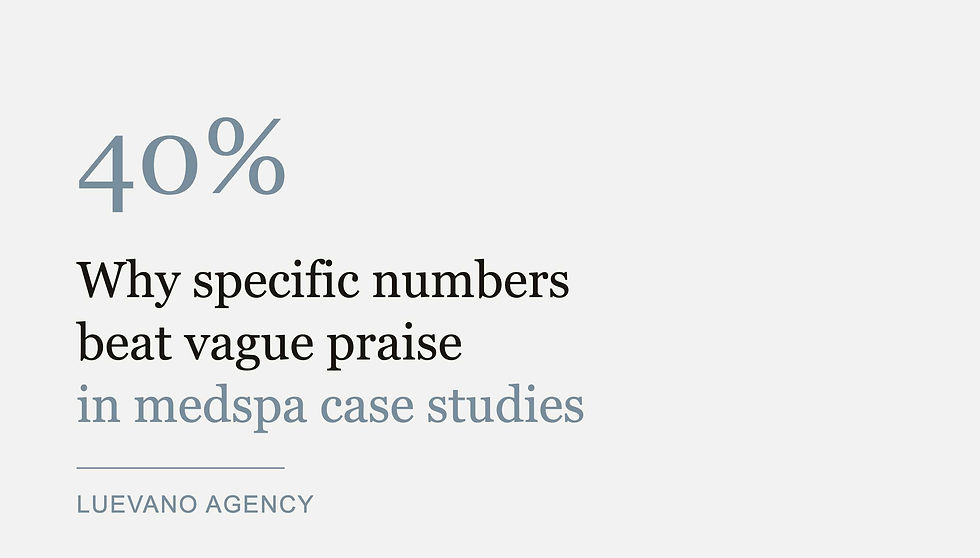
Add specific numbers to your case studies and testimonials. A claim like "great results" is easy to skip past. A claim like "40 percent increase in bookings in 90 days" is specific enough to get pulled into a generated answer as a citation.
None of these require rebuilding your website. They are additions to what you already have, and they are the same additions that tend to strengthen traditional SEO at the same time.
FAQ
Is GEO replacing SEO?No. Strong traditional SEO is still the foundation. GEO adds an additional layer on top of it, aimed specifically at how AI models retrieve and summarize content rather than how search engines rank pages.
Do I need all new content, or just updates?Mostly updates. Adding schema, strengthening your About page, and putting real numbers into existing case studies will do more right now than writing an entirely new set of pages.
Get a GEO readiness check from LUEVANO →


Comments